
The information about the Keynote Speakers of ICEAI2026 is as follows, which will be updated regularly.

Dr. Xiaolan Yu, Professor
School of Law, Anhui Normal University, Wuhu, China
Biography: Dr. Xiaolan Yu is a Professor at the School of Law, Anhui Normal University, Wuhu, China. She serves as Director of the Anhui Provincial Research Base for Digital Discipline Inspection and Supervision. Her research agenda centers on data law, artificial intelligence law, the legal governance of medical AI and sensitive biomedical data, data property rights, cross-border data regulation, and digital social governance. She has presided over several major research grants, including a project funded by the National Social Science Fund of China. She is the author of the monograph Research on Data Property Rights and numerous peer-reviewed articles published in leading Chinese legal journals. She was a visiting scholar at the University of Oxford, the University of Wisconsin–Madison, and the University of Hong Kong. Beyond academic research, she regularly delivers legal training and advisory services for judicial and regulatory authorities. During her upcoming visiting appointment, she aims to conduct comparative research on biomedical data protection and responsible AI governance, and build sustainable channels for international academic collaboration.
Topic: Empowerment and Reshaping: An Analysis of the Systematic Reform Path of Legal Education in the Age of Artificial Intelligence
Abstract: Generative artificial intelligence represented by ChatGPT and Sora is profoundly reshaping social structures, legal relations and governance models, bringing all-round impacts on legal education. Traditional legal education is confronted with a paradigm crisis in knowledge imparting and skill training. This paper argues that the objective of legal education in the AI era should shift from cultivating “masters of legal knowledge” to fostering “outstanding rule-of-law talents for human-AI collaboration”, namely interdisciplinary professionals capable of managing technologies, equipped with higher-order thinking, value rationality and innovative competence. To achieve this goal, systematic reforms ought to be advanced: constructing an interdisciplinary curriculum matrix of “Law + Technology + …”, transforming the teaching model from “lecture-centered” to “human-AI interactive inquiry-centered”, prioritizing the cultivation of core competencies such as critical thinking, strengthening integrated education of techno-ethics and rule-of-law ethics, building interdisciplinary teaching teams and establishing diversified process-oriented evaluation mechanisms, so as to provide talent support for the development of a Digital China and a Rule-of-Law China.
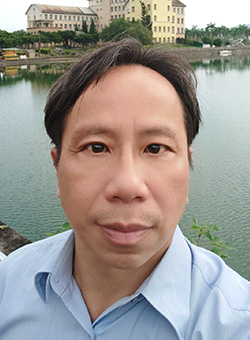
Dr. Wu-Yuin Hwang, Professor
Institute of Network Learning Technology, National Central University, Taiwan, China.
Biography: Dr. Wu-Yuin Hwang is a Distinguished Professor at the Institute of Network Learning Technology, National Central University, Taiwan. He is one of Stanford/Elsevier’s Top 2% Scientists in the field of education and educational research in 2023, 2024, 2025, and 2026. He was ranked top 1 in terms of the number of publications, H-index papers and impact factors. These showed that the contribution of Dr. Hwang to the field of technology-assisted language learning has been significantly recognized. In the 10 years (2007-2017), Dr. Hwang was ranked in top 7 scholars in the world in terms of publication performance in 65 high-quality SSCI journals in the area of instructional design and technology. He published around 150 high quality journal papers in major international journals indexed by SSCI and SCI in the area of educational technology. Owing to the outstanding contributions of his research outputs to the National Science Council of Taiwan, Dr. Hwang received the Ta-You Wu, Memorial Award (National Science Council) in 2005 and the Outstanding Research Award (Ministry of Science and Technology) in 2021.
Topic: Eternality in Learning: A Three-Stage Conceptual Framework for the Evolution of Generative AI to Influence Human Learning: Smart Tools, Learning Partners, and Cognitive Clone
Abstract: Generative Artificial Intelligence (GAI) represents a paradigm shift that surpasses previous technological disruptions, such as the metaverse and blockchain. Unlike these predecessors, GAI is reshaping our reality into a mixed world where smart digital and physical objects could connect and learn together. This study employs a narrative literature review to construct a three-stage evolutionary framework to understand how this evolution transforms human cognition. The proposed framework traces the trajectory of GAI from stage one as smart tools, which enhance efficiency, to stage two as learning partners, which foster bilateral co-creation, and finally, to stage three as cognitive clones (mind shadows) in the figure. This final stage marks a critical breakthrough where GAI evolves from a supportive tool into an autonomous agent capable of breaking through human lifespan limitations. The mind shadow facilitates eternal learning (i.e., learning forever) by utilizing a unified agent and memory to map the owner’s cognitive patterns, ensuring that individual wisdom is not only preserved but continues to evolve autonomously beyond physical existence, addressed as cognitive clones. This study was also integrated with UNESCO’s AI Competency Frameworks. As a result, it shows that education must pivot to succeed in this mixed world, where teachers must become ethical orchestrators of human-AI symbiosis, while students must cultivate human agency to leverage these eternal agents for continuous, reciprocal cognitive upgrading.

Dr. Yuncheng Jiang, Professor
School of Computer Science and School of Artificial Intelligence, South China Normal University, Guangzhou, China
Biography: Dr. Yuncheng Jiang is a Professor at the School of Computer Science and the School of Artificial Intelligence, South China Normal University, Guangdong, China, and named among the World’s Top 2% Scientists (Stanford University list, 2024 and 2025). He received his Ph.D. from the Institute of Computing Technology, Chinese Academy of Sciences in 2004. His research has been published in journals and conferences including TOIS, TKDE, TNNLS, TEC, IPM, TLT, TCSS, TBD, TCE, AAAI, IJCAI, ACM MM, CIKM, ECML PKDD, DASFAA, and AIED. He was a recipient of the Best Paper Awards at KSEM 2022 and CSIS-IAC 2024, and the Special Session Best Paper Awards at ADMA 2024 and 2025. He is a member of the KSEM (International Conference on Knowledge Science, Engineering and Management) steering committee, and the chair of IEEE Task Force on Educational Data Mining, the vice chairs of IEEE Guangzhou Section Computer Society Chapter, ACM Guangzhou Chapter and CCF Guangzhou Chapter, a distinguished membership of China Computer Federation (CCF), and a council member of the Chinese Association for Artificial Intelligence (CAAI). He also is the General Co-Chair of NCTCS 2023 and AIEC 2026, the PC Co-Chairs of PRICAI 2026, KSEM 2023, and CAAI DMAI 2023, 2024 and 2025, the Workshop chair of PRICAI 2024, the chairs of IWEAI 2024, 2025 and 2026, and the Track chairs of Special Track on Data Intelligence & Knowledge Mining at ADMA 2024 and 2025. His current research interests include graph computing, multimodal learning, multimodal knowledge graphs, educational artificial intelligence and data science.
Topic: Knowledge Tracing Models Based on Deep Learning and MLLMs
Abstract: Knowledge Tracing is one of the key technologies enabling intelligent education. Based on multimodal interactive data and process data such as students’ historical problem-solving sequences, it dynamically infers learners’ mastery level of each knowledge concept and predicts their future performance on exercises. It serves as the core underlying algorithm for adaptive learning and personalized learning, as well as the infrastructure for various downstream tasks in intelligent education, including exercise recommendation, learning assessment, and learning situation analysis. This talk mainly analyzes the current research progress of Knowledge Tracing, and particularly presents the latest work completed by my research team in recent years, with a focus on diverse Knowledge Tracing methods based on deep learning and multimodal large language models.
2026 2nd International Conference on Education and Artificial Intelligence (ICEAI2026) sincerely invites specialists and scholars to join the conferences and become the keynote speakers.
Benefits of Keynote Speakers
1. Attend the conference for free
2. Publish a paper free of charge
3. Free meals during the conference
4. Free one-day tour of Xiamen
5. Official certificate of keynote speaker.
Experts with doctoral degrees and associate professor titles or above will be preferred as keynote speakers. If you are interested in becoming a Keynote Speaker, please make an application either way in the following.
If you only have a primary idea about the keynote speech, you can fill in your personal information in advance.
If you have a clear topic about the keynote speech you would like to deliver, please click here to download the proposal form and submit your application package to keynotespeaker@conference123.net
Your application package should include following documents:
1. A completed proposal form
2. Your curriculum vitae
© Copyright 2015-2026 2nd International Conference on Education and Artificial Intelligence - All rights reserved.

 X (formerly Twitter)
 LinkedIn